

As we know, so far we have only found life on our planet, and this is due to its location relative to the Sun. We are in what scientists call the "habitable zone." Thanks to this, along with the atmosphere and the ozone layer, we can live. Earth has developed diverse climates depending on the temperature range. Unlike the temperatures found in the rest of the Solar System, our planet experiences a very low temperature range.
In this article we can learn about the different types of climate that exist on our planet and what characteristics each one has. Do you want to know more about it?
What is the weather like?
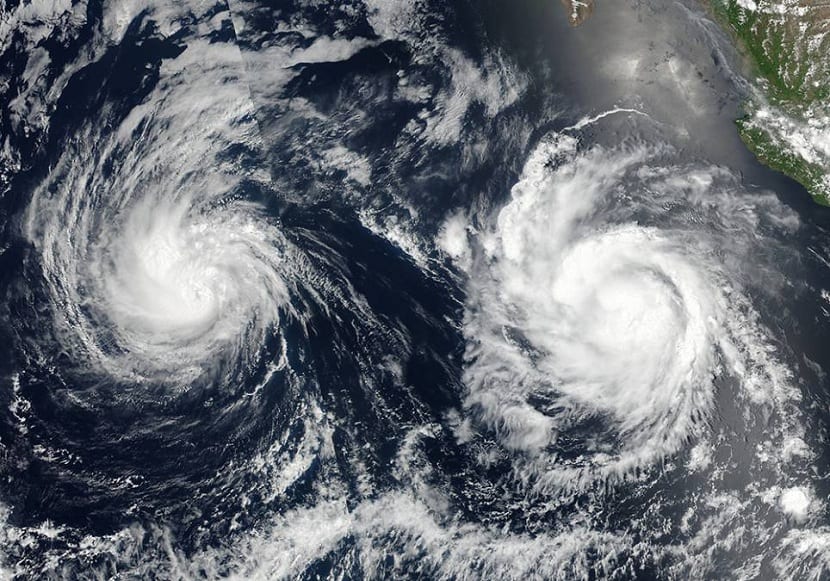
It's common to confuse meteorology with climatology. It's important to clearly understand the difference between these concepts. When we look at a weather forecaster and they tell us it will rain in two days and that there will be wind gusts of 50 km/h, they are referring to meteorology. In this case, we are analyzing the atmospheric conditions that will occur at a specific time and place. This is part of weather forecasting, in which, thanks to a range of meteorological instruments , we can know with a high degree of reliability what will happen.
On the other hand, we have climate. Climate can be defined as the set of states of variables that remain constant over time. That sentence probably didn't make much sense to you. Let's explain it in more detail. Meteorological variables include temperature , precipitation levels (whether rain or snow ), storm patterns, wind, atmospheric pressure , and so on. Well, the set of all these variables has certain values throughout a calendar year. These are known as climate drivers.
All the values of the meteorological variables are recorded and analyzed, as they consistently hover around the same threshold, and are then plotted on a climograph . For example, temperatures below -30 degrees Celsius have not been recorded in Andalusia. This is because such temperature values do not correspond to the Mediterranean climate. Once all the data is collected, the climates are zoned according to these values.
The North Pole is characterized by cold temperatures, strong winds, precipitation in the form of snow, etc. These characteristics give it the name polar climate.
Types of climate according to what exists on Earth
The Earth's climates can be classified not only according to the meteorological variables mentioned above, but also by other factors such as altitude, latitude, and distance from the sea. The following classification will provide a broad overview of the different climate types and their characteristics. Furthermore, each major climate type has more detailed subtypes specific to smaller regions.
Warm weather

These climates are characterized by high temperatures. The average annual temperature is around 20 degrees Celsius, with little variation between seasons. They are areas with abundant grasslands and forests, high humidity , and, in many cases, abundant rainfall. The following subtypes are found:
- Equatorial climate. As its name indicates, it is a climate that extends over the equator. Rainfall is generally abundant throughout the year, there is high humidity and it is always hot. They are found in the Amazon area, central Africa, Insulindia, Madagascar and the Yucatan Peninsula.
- Tropical climate. It is similar to the previous climate, except that it extends along the line of the Tropics of Cancer and Capricorn. The only difference is that here rainfall is abundant only in the summer months. It can be found in the Caribbean, Venezuela, Colombia, Ecuador, Peru, some parts of South America, Southeast Asia, parts of Australia, Polynesia, and Bolivia. It is also important to know about the types of hot climates.
- Arid subtropical climate. This type of climate has a wide range of temperatures and rainfall varies throughout the year. It can be seen in southwestern North America, southwestern Africa, parts of South America, central Australia, and the Middle East.
- Desert and semi-desert. This climate is characterized by having high temperatures throughout the year with very pronounced temperature ranges between day and night. There is hardly any humidity, the vegetation and fauna are scarce and the rainfall is also scarce. They are found in central Asia, Mongolia, west central North America, and central Africa.
Temperate climates

They are characterized by having average temperatures that are around 15 degrees. In these climates we can see the seasons of the year well differentiated. We find places distributed between the middle latitudes between 30 and 70 degrees from the parallels. We have the following subtypes.
- Mediterranean climate. Among its main characteristics are fairly dry and sunny summers, while winters are rainy. We can find it in the Mediterranean, California, southern South Africa, and southwestern Australia. If you want to know more about this climate, you can consult information about the cumulus climate.
- Chinese climate. This type of climate has tropical cyclones and winters are very cold.
- Oceanic climate. It is the one found in all coastal areas. In general, there are always a lot of clouds and rain, although there are neither winter nor summers with extreme temperatures. It is on the Pacific coasts, New Zealand and some parts of Chile and Argentina.
- Continental weather. It is the indoor climate. They are found in areas that have no coastline. Therefore, they heat up and cool down earlier since there is no sea that acts as a thermal regulator. This type of climate is found mainly in central Europe and China, the United States, Alaska and Canada.
Cold climates

In these climates, temperatures do not usually exceed 10 degrees Celsius and there is abundant precipitation in the form of snow and ice.
- Polar climate. It is the climate of the poles. It is characterized by having very low temperatures all year round and the absence of vegetation since the ground is permanently frozen.
- High mountain climate. It is found in all high mountain areas and is characterized by abundant rainfall and temperatures that decrease with height.

I hope that with this information you can better know the types of weather.
Table of Contents